Built-In vs Wall Mounted Electric Fires: What’s the Difference?
Built-In vs Wall Mounted Electric Fires: What’s the Difference?
If you are choosing an electric fire, one of the first things to decide is how you want it installed.
Do you want the fire mounted on the wall like a feature?
Or do you want it built into the wall for a cleaner, more finished look?
Both options can work beautifully. They just suit different rooms, budgets and installation plans.
This is the kind of thing we would normally talk through in the showroom, because the right answer is not always the same for every home.
A wall-mounted electric fire is usually easier to install.
A built-in electric fire usually gives a more premium, fitted look.
The best choice depends on your wall, your room, your budget and how much building work you want to do.
Quick answer
A wall-mounted electric fire is fitted onto the surface of the wall, so it is usually quicker and simpler to install.
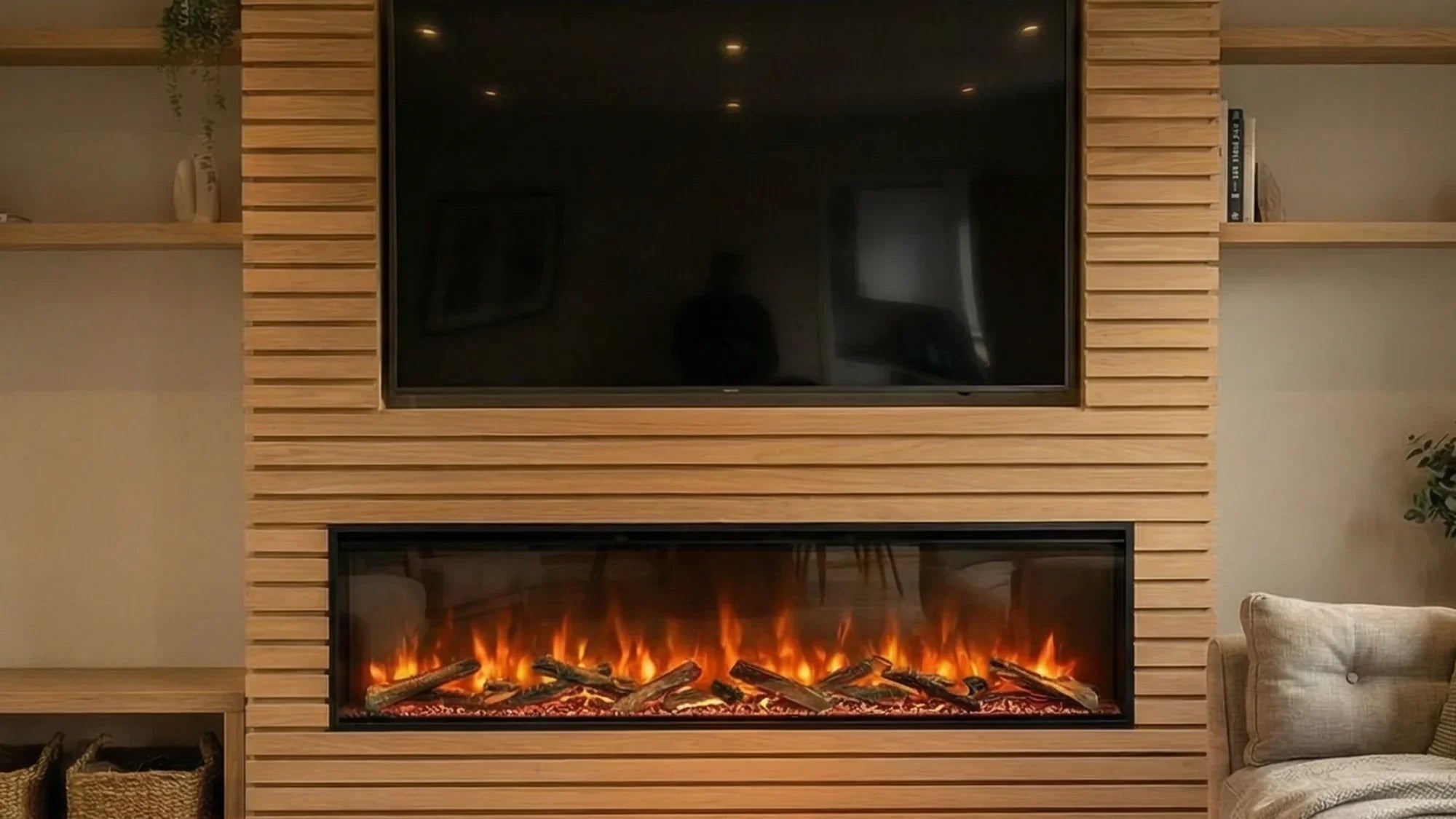
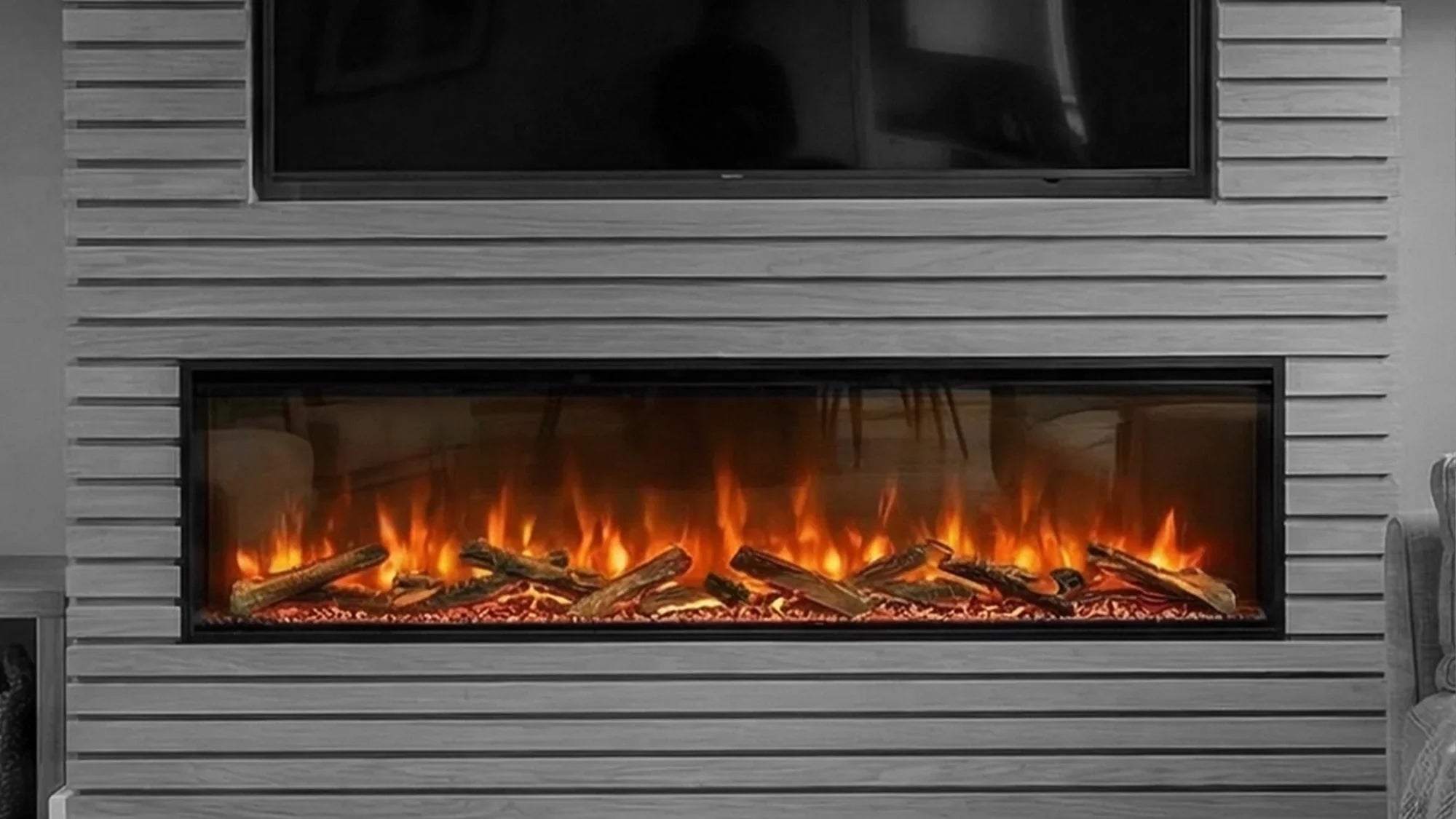
A built-in electric fire is recessed into a wall, fireplace opening, false chimney breast or media wall, giving a cleaner and more integrated look.
Choose wall-mounted if you want easier installation, less building work and a quicker room upgrade.
Choose built-in if you want a more polished media wall, feature wall or fireplace-style finish.
Here is the easiest way to think about it.
A wall-mounted fire sits on the wall.
A built-in fire sits into the wall.
That one difference changes the whole project.
Wall-mounted electric fires are great when you want the fire to become a quick feature in the room without building a full media wall or chimney breast.
Built-in electric fires are better when you want the fire to look like it was designed into the room from the start.
Neither is automatically better. They just solve different problems.
What is a wall-mounted electric fire?
A wall-mounted electric fire is fitted directly onto the wall surface.
It is a bit like mounting a TV or large mirror. The fire sits proud of the wall instead of being recessed into it.
This makes wall-mounted fires popular for people who want a clean fireplace feature without major building work.
Good for:
-
Bedrooms
-
Apartments
-
Playrooms
-
Simple living room upgrades
-
Rental-style layouts where major works may not suit
-
Homes without a chimney
-
Customers who want a quicker installation
A wall-mounted electric fire can be a smart option when you want to improve the room without turning it into a building project.
What is a built-in electric fire?
A built-in electric fire is installed into a prepared opening.
That opening could be part of:
-
A media wall
-
A false chimney breast
-
A fireplace opening
-
A stud wall
-
A recessed feature wall
-
A custom-built surround
The body of the fire sits into the wall or structure, while the front of the fire remains visible.
This gives a cleaner and more architectural look.
Built-in fires are popular because they feel more like part of the room, rather than something added afterwards.
Good for:
-
Media walls
-
TV feature walls
-
Modern living rooms
-
False chimney breast builds
-
Fireplace openings
-
Premium interior projects
-
One, two or three-sided installations
If you want the room to feel more designed and finished, built-in is usually the stronger option.
Which looks better?
This depends on the room.
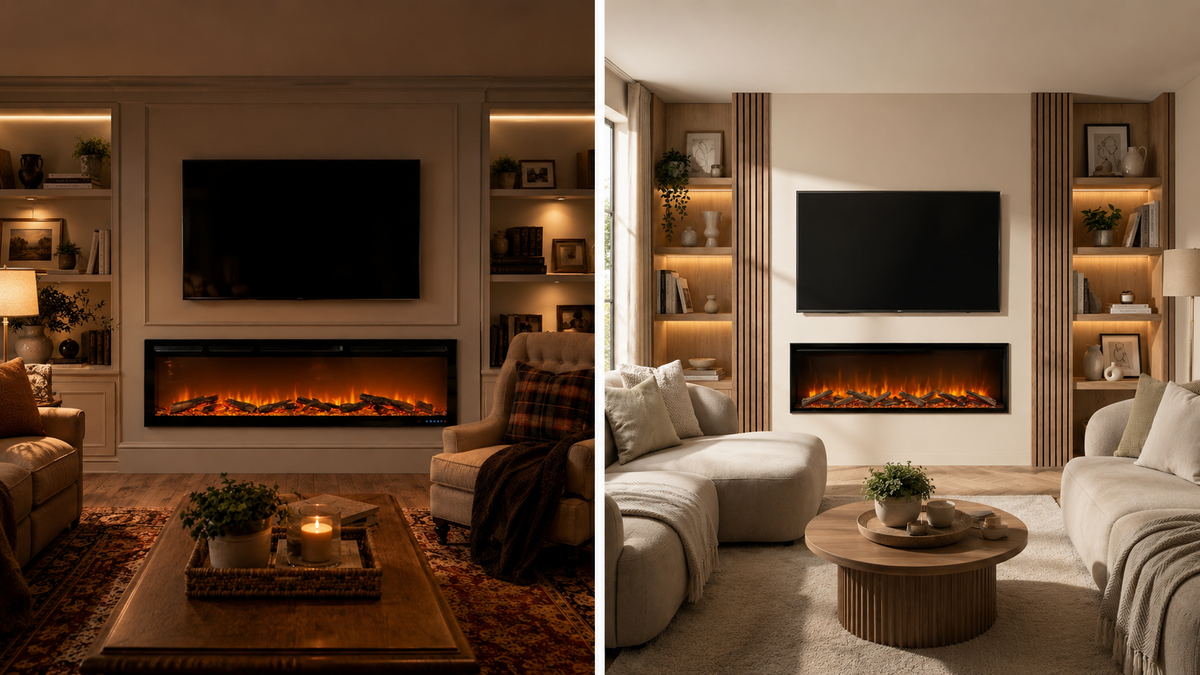
A built-in electric fire usually looks more polished because it sits neatly into the wall. It gives that clean, fitted, interior-designed look.
This is why built-in fires are so popular for media walls and feature walls.
A wall-mounted electric fire can still look excellent, especially when the room is styled well, but it will usually feel more like an appliance or feature fitted onto the wall.
So the honest answer is:
Built-in usually looks more premium.
Wall-mounted usually wins for simplicity.
If you are doing a full living room upgrade, built-in may be worth the extra planning.
If you want a quicker change without building work, wall-mounted may make more sense.
Which is easier to install?
Wall-mounted is usually easier.
A wall-mounted electric fire normally needs suitable wall fixings, safe power access and enough clear space around it.
A built-in electric fire needs more planning because the wall or opening has to be prepared correctly.
For built-in installation, you usually need to check:
-
Opening width
-
Opening height
-
Opening depth
-
Power access
-
Cable routing
-
Clearances
-
Airflow
-
Wall structure
-
TV position, if installing below a TV
-
Future access for cleaning or servicing
This does not mean built-in fires are difficult. It just means the wall needs to be planned around the fire.
Which is better for a media wall?
For most media walls, built-in is the better choice.
That is because a media wall is usually designed to make the TV, fire, shelving and wall finish look like one complete feature.
A built-in electric fire suits that perfectly because it sits neatly into the structure.
Wall-mounted fires can work on feature walls, but they usually do not give the same clean media wall finish.
If you want a proper TV media wall with a polished, built-in look, choose a built-in or three-sided electric fire.
If you want a simpler fire under or near a TV without a full wall build, wall-mounted may still be a good option.
Which is better for a bedroom or apartment?
Wall-mounted electric fires can be excellent for bedrooms, apartments and smaller rooms.
They are usually simpler to install and do not need a deep wall build.
That makes them a good option if you want a cosy feature without losing too much floor space or getting into a full renovation.
Built-in fires can still work in bedrooms and apartments, but they need more planning around wall depth and installation.
For a quick upgrade, wall-mounted is often easier.
For a more finished, designed look, built-in can still be worth considering.
Which is better for a fireplace opening?
If you already have a fireplace opening, a built-in or inset-style electric fire usually makes more sense.
The fire can sit into the existing opening and help bring the fireplace area back to life.
A wall-mounted fire may not be the best option if the room already has a natural chimney breast or hearth area, unless you are changing the whole layout.
For old fireplace openings, look carefully at:
-
Opening width
-
Opening height
-
Opening depth
-
Hearth position
-
Surround size
-
Power access
-
Condition of the opening
If the fireplace opening is suitable, a built-in or inset electric fire can look very natural.
Which is cheaper?
Wall-mounted fires are often cheaper overall because the installation is usually simpler.
You may not need to build a media wall, alter a fireplace opening or create a recessed structure.
Built-in fires can cost more as a full project because you may need joinery, plastering, electrical work, decorating or a custom wall build.
But that extra work is also what gives you the more premium finished result.
So the better question is not just “which fire is cheaper?”
It is:
How finished do you want the room to look?
If you want a quick and cost-effective upgrade, wall-mounted may be the better route.
If you want a full feature wall, built-in is usually worth the extra planning.
Can both be used without heat?
Yes, many wall-mounted and built-in electric fires can be used on flame-only mode without turning on the heater.
This is one of the biggest everyday benefits of electric fires.
You can enjoy the look and glow of the fire even when the room is already warm.
As a guide, many Lumo electric fires cost approximately 1c–3c per hour on flame-only mode, depending on the model and your electricity rate.
The heater setting costs more because it produces warmth, similar to other electric room heaters.
Running costs are estimates only and will vary depending on your electricity tariff, model, settings and usage.
Do built-in and wall-mounted fires give heat?
Yes, many electric fires include a heater.
The heater is usually designed for local room comfort rather than heating the whole house.
The best way to use an electric fire is:
-
Flame effect for everyday atmosphere
-
Heater when you want extra warmth
-
Main heating system for whole-home heating
That applies whether the fire is built-in or wall-mounted.
Which one is safer?
Both can be safe when installed correctly and used according to the product manual.
The key is choosing the right fire for the right installation type.
A wall-mounted fire needs suitable wall fixings and safe power access.
A built-in fire needs correct opening size, clearances, airflow and access to power.
You should not block vents, trap cables, ignore clearance guidance or build a fire into a wall without checking the manual.
If electrical work is needed, use a qualified electrician.
Built-in electric fire: pros and cons
Pros
-
Cleaner, more premium look
-
Great for media walls
-
Works well in false chimney breasts
-
Can look like part of the room design
-
Good for one, two or three-sided installations
-
Stronger feature-wall impact
Cons
-
Needs more planning
-
Usually involves more building work
-
Wall depth matters
-
Power access must be planned
-
Harder to change later than a wall-mounted fire
Wall-mounted electric fire: pros and cons
Pros
-
Easier installation
-
Usually less building work
-
Good for bedrooms and apartments
-
Flexible room upgrade
-
Easier to change later
-
Often more cost-effective as a project
Cons
-
Less integrated than built-in
-
Sits proud of the wall
-
May look more like an appliance
-
Not always the best choice for media walls
-
Wall fixings and cable management still need planning
Best Lumo built-in and wall-mounted options
The right Lumo fire depends on the room and the finished look you want.
Here is the simple showroom breakdown.
Lumo Aura Series
The Lumo Aura Series is a strong option if you want an easier electric fire feature without a major building project.
It works well for customers who want a clean wall-mounted or simple inset-style upgrade.
Good for:
-
Bedrooms
-
Apartments
-
Playrooms
-
Simple living room upgrades
-
Wall-mounted layouts
-
Customers who want easy installation
Choose Aura if you want a simpler electric fire upgrade with less building work.
Lumo Vision Series
The Lumo Vision Series works well for clean wall-mounted or recessed installations.
It is a good option when you want a modern fire feature but do not want to build a deep media wall.
Good for:
-
Wall-mounted installations
-
Recessed feature walls
-
Modern living rooms
-
Homes without a chimney
-
Flexible room upgrades
Choose Vision if you want a clean modern look with flexible installation options.
Lumo Comfort Series
The Lumo Comfort Series is a practical option for slimline media walls, chimney breast builds and wall-mounted installations.
It is a good middle-ground range when you want a cleaner built-in look but need to keep the wall depth sensible.
Good for:
-
Slimline media walls
-
TV feature walls
-
Shallow wall projects
-
Everyday living rooms
-
Flexible installation
Choose Comfort if you want a practical slimline option for modern feature walls.
Lumo Cozy Series
The Lumo Cozy Series is designed for slimline built-in media wall projects.
It is a strong choice if you want the fire to look properly built into the room without creating a very deep wall.
Good for:
-
Built-in media walls
-
False chimney breast builds
-
Slimline installations
-
Modern living rooms
-
TV wall designs
Choose Cozy if you want a clean built-in media wall look while keeping the wall depth practical.
Lumo Ultra Series
The Lumo Ultra Series is a deeper built-in electric fire range designed for more premium feature walls.
It suits customers who want the fire to have more presence and a stronger fireplace feel.
Good for:
-
Deeper media walls
-
Larger living rooms
-
Premium feature walls
-
Full-depth installations
-
Main room focal points
Choose Ultra if you want a built-in fire with more depth and visual impact.
Lumo Odyssey Series
The Lumo Odyssey Series is ideal for wider panoramic built-in media wall designs.
It suits larger rooms where the fire needs to become a statement feature.
Good for:
-
Wide media walls
-
Large open-plan rooms
-
Statement feature walls
-
Premium interiors
-
Panoramic flame effect
Choose Odyssey if you want a wide, statement-style built-in electric fire.
Lumo Loft Series
The Lumo Loft Series is a strong option for fireplace openings and inset-style installations.
It is best for customers who already have a fireplace opening or want a more classic fireplace layout.
Good for:
-
Fireplace openings
-
Hearth upgrades
-
Snugs
-
Living rooms
-
Replacing an old fire
-
Homes where a media wall is not the plan
Choose Loft if you want an inset electric fire for a fireplace opening.
Which should you choose?
Here is the simple version:
Choose wall-mounted if you want easier installation, less building work and a quicker room upgrade.
Choose built-in if you want a cleaner, more premium finish that feels designed into the room.
Choose inset if you already have a fireplace opening and want to upgrade it.
Choose a media wall fire if you are building a full TV feature wall.
If you are still unsure, start with the room.
Ask yourself:
-
Do I want quick installation or a full feature wall?
-
Do I have enough wall depth?
-
Am I using an existing fireplace opening?
-
Is the TV going above the fire?
-
Do I want the fire to sit quietly or become the main focal point?
-
How much building work am I happy to do?
Once those answers are clear, the right option becomes much easier.
Common mistakes to avoid
Here are the mistakes we see most often:
-
Choosing a built-in fire without checking wall depth
-
Choosing a wall-mounted fire when the customer really wants a media wall look
-
Forgetting power access
-
Not checking clearances
-
Mounting the TV too high
-
Assuming all electric fires can be installed the same way
-
Choosing by product photo instead of actual dimensions
-
Forgetting future access for cleaning or maintenance
-
Building the wall before choosing the fire
Most of these can be avoided by checking the room and installation type before ordering.
What to send us before choosing
If you are not sure whether built-in or wall-mounted is right for you, send us:
-
Room photos
-
Wall width
-
Ceiling height
-
Available wall depth
-
TV size, if using one
-
Whether there is an existing fireplace opening
-
Whether you want a quick install or a full feature wall
-
Any inspiration images you like
With that information, we can usually point you towards the right Lumo range quickly.
Final advice
Built-in and wall-mounted electric fires can both look excellent, but they suit different projects.
Wall-mounted is best when you want something simpler, quicker and easier to install.
Built-in is best when you want a cleaner, more premium feature wall or media wall finish.
The right choice depends on your room, wall depth, installation plan and the finished look you want.
If you are unsure, send us a few photos and measurements. We can help you narrow down the best Lumo fire before you order.
FAQs
What is the difference between a built-in and wall-mounted electric fire?
A wall-mounted electric fire sits on the surface of the wall. A built-in electric fire is recessed into a wall, media wall, false chimney breast or fireplace opening for a cleaner fitted look.
Is a built-in electric fire better than a wall-mounted fire?
Built-in fires usually look more premium and integrated, especially in media walls. Wall-mounted fires are usually easier to install and better for quicker room upgrades.
Do wall-mounted electric fires need a chimney?
No. Wall-mounted electric fires do not need a chimney, flue or gas supply. They still need safe wall fixing, power access and correct clearances.
Do built-in electric fires need a chimney?
No. Built-in electric fires do not need a chimney or flue, but they do need correct wall depth, airflow, power access and installation planning.
Which is best for a media wall?
A built-in electric fire is usually best for a proper media wall because it sits neatly into the wall structure and gives a cleaner finished look.
Which is easiest to install?
A wall-mounted electric fire is usually easiest to install because it sits on the surface of the wall and normally needs less building work.
Can both built-in and wall-mounted electric fires be used without heat?
Many electric fires allow flame-only mode without heat. As a guide, many Lumo electric fires cost approximately 1c–3c per hour on flame-only mode, depending on the model and your electricity rate.
Which Lumo fire is best for wall-mounted installation?
The Lumo Aura and Lumo Vision ranges are strong options for wall-mounted or simpler recessed room upgrades.
Which Lumo fire is best for built-in installation?
The Lumo Cozy, Comfort, Ultra and Odyssey ranges are strong built-in options for media walls and feature walls, depending on wall depth and room size.
Should I choose the fire before building the wall?
Yes. It is usually better to choose the exact fire before building a media wall or recess, so your installer can work from the correct dimensions, clearances and power requirements.

Written by My Store Admin