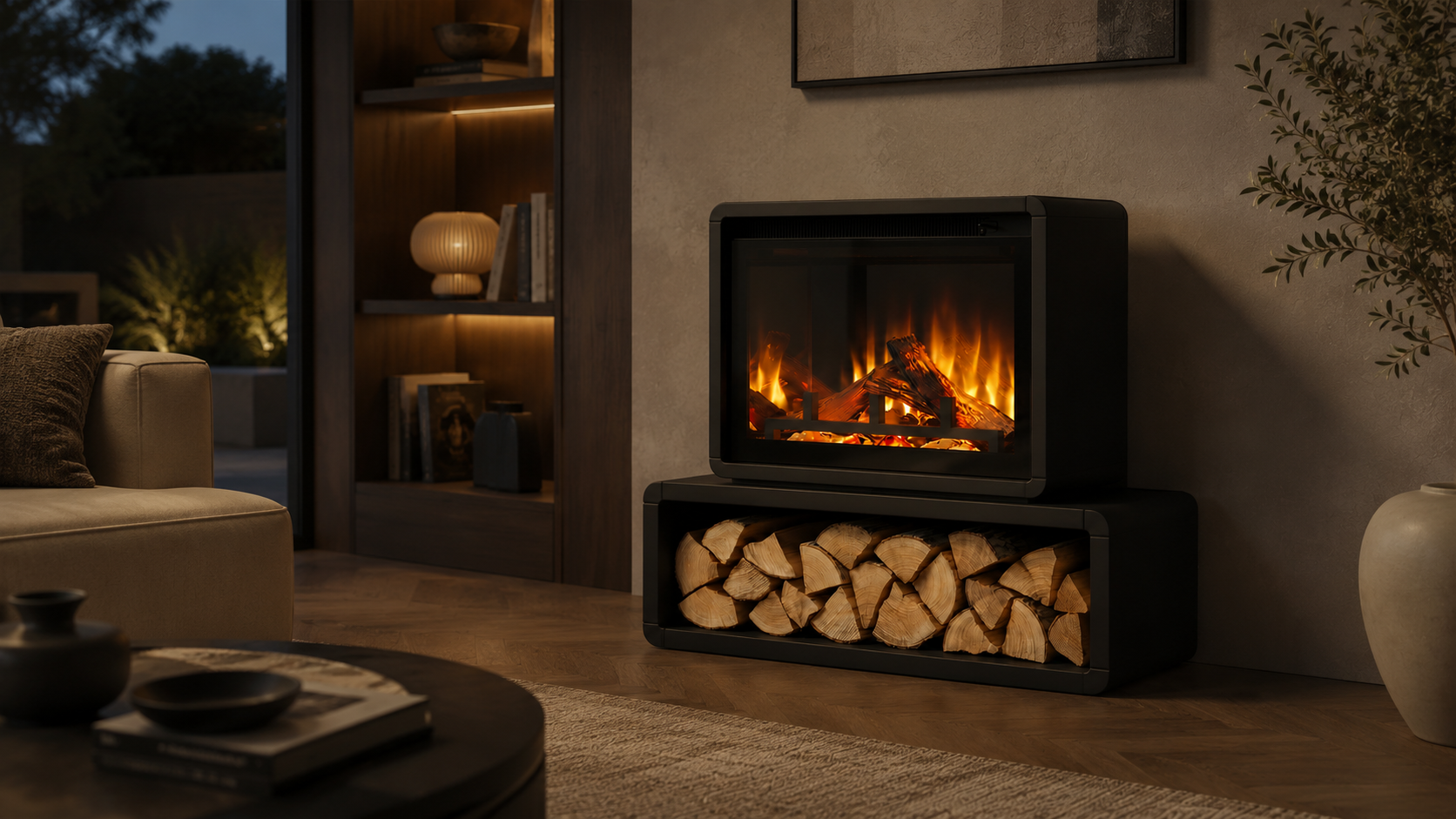
Electric Fire vs Gas Fire: Which Is Better for a Modern Home?
If you are planning a new fireplace, media wall or living room upgrade, one of the first questions is usually this:
Should I go electric or gas?
And honestly, the answer depends on the type of home you have and what you want the fire to do.
Gas fires still have their place. They can give strong heat, they have a real flame, and they can work well in homes that already have the right chimney, flue, gas supply and ventilation.
But for most modern homes, especially if you are building a TV media wall, updating a fireplace opening, designing a bedroom feature wall, or trying to keep the project clean and simple, electric is usually the easier route.
Not because gas is bad, but because electric gives you far more freedom when you are designing a modern room.
Quick answer
For most modern homes, an electric fire is usually the better choice if you want a clean fireplace look without needing a chimney, flue or gas supply.
Electric fires are especially well suited to media walls, apartments, bedrooms, new builds, renovations and feature walls where design flexibility matters.
A gas fire may still suit you if you mainly want strong room heat, already have the correct chimney or flue setup, and are happy with the extra installation and servicing requirements.
Here is the easiest way to think about it.
Choose gas if you want:
- A real flame
- Strong heat output
- A traditional fireplace feel
- To use an existing chimney or flue
- A fire that is mainly about heating the room
Choose electric if you want:
- A modern fireplace feature
- A fire for a media wall or TV wall
- Flame effect with or without heat
- Lower day-to-day maintenance
- More freedom with room design
- A cleaner installation without a chimney or flue
Neither option is automatically right or wrong. It depends on whether your fire is mainly there for heat, atmosphere, design, or all three.
For most modern Lumo customers, the fire is usually part of the room design. It is there to create a focal point, add atmosphere, work with a TV wall, and make the room feel finished. In that case, electric usually makes more sense.
Installation: electric is usually much easier
This is where electric fires really start to pull ahead.
An electric fire does not need a chimney, gas supply or flue. That means it can be fitted in far more places and usually gives you more design freedom.
Electric fires can work well in:
- Media walls
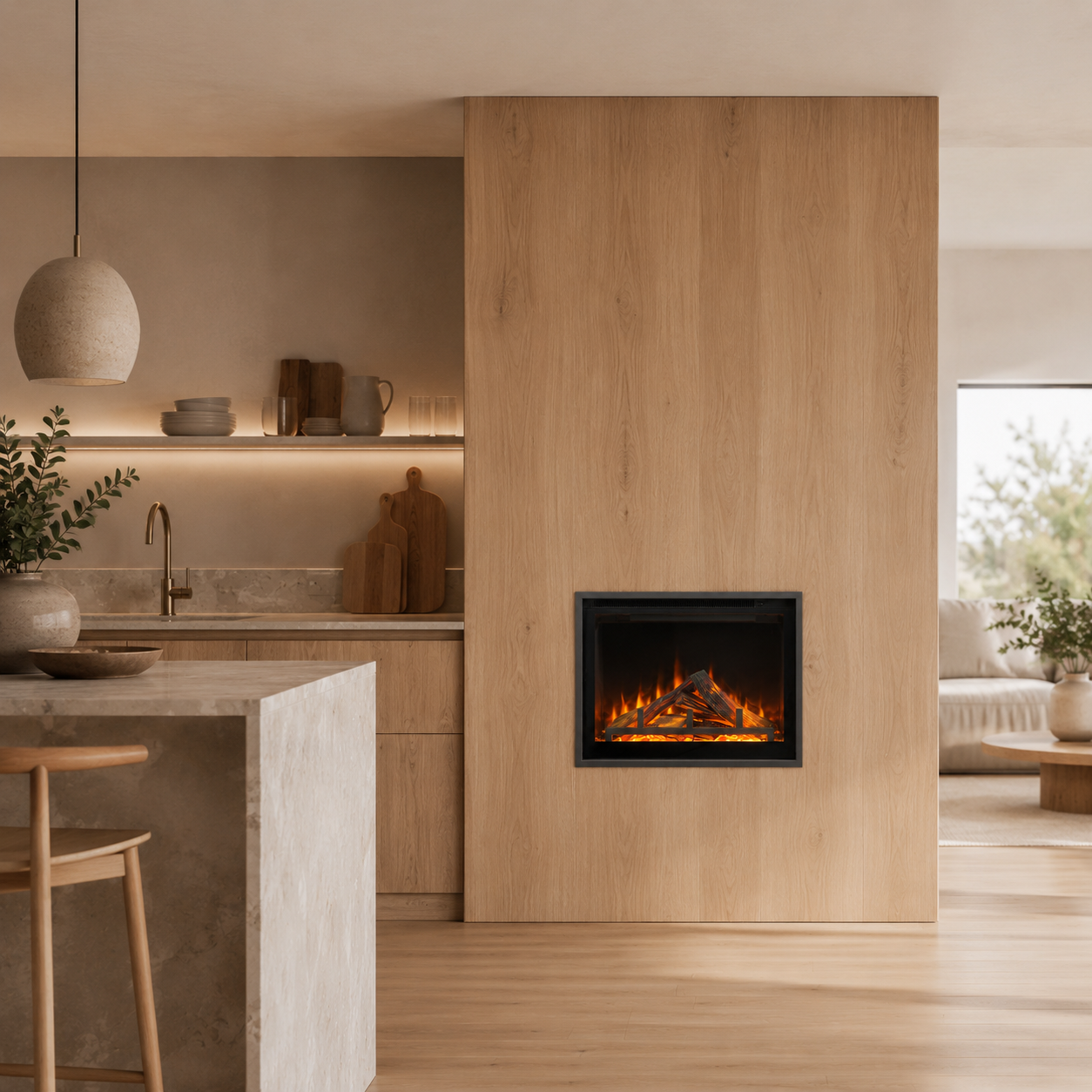
- Fireplace openings
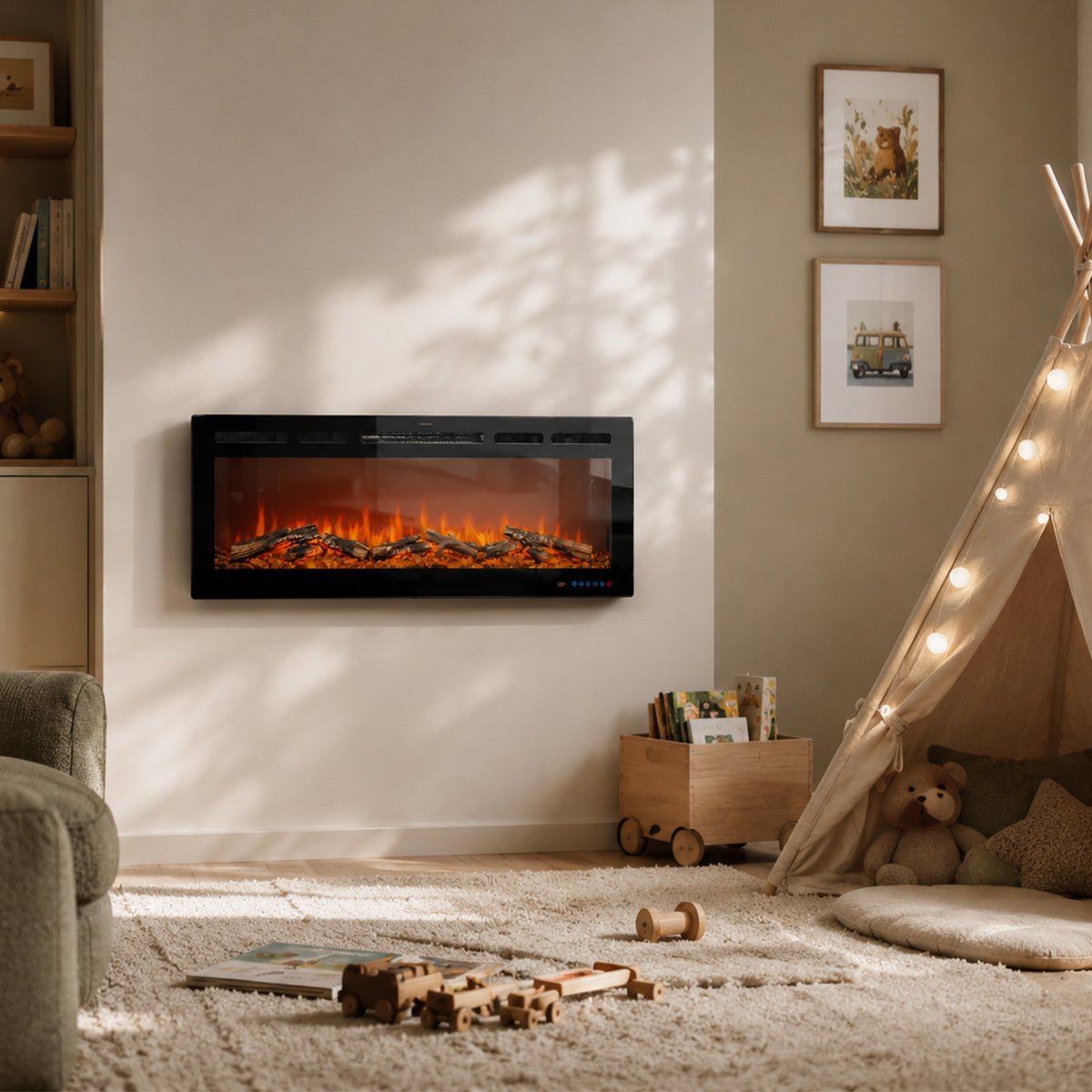
- Bedrooms
- Apartments
- New builds
- Renovations
- Wall-mounted layouts
- Built-in feature walls
- Rooms with no chimney
With gas, there is more to think about. You may need a suitable flue, ventilation, gas pipework and a qualified gas installer. You also need to think carefully about heat clearances, servicing access and safety requirements.
So if you are starting from a blank wall and want the simplest route to a modern fireplace feature, electric is normally the easier option to plan.
Media walls: electric usually wins
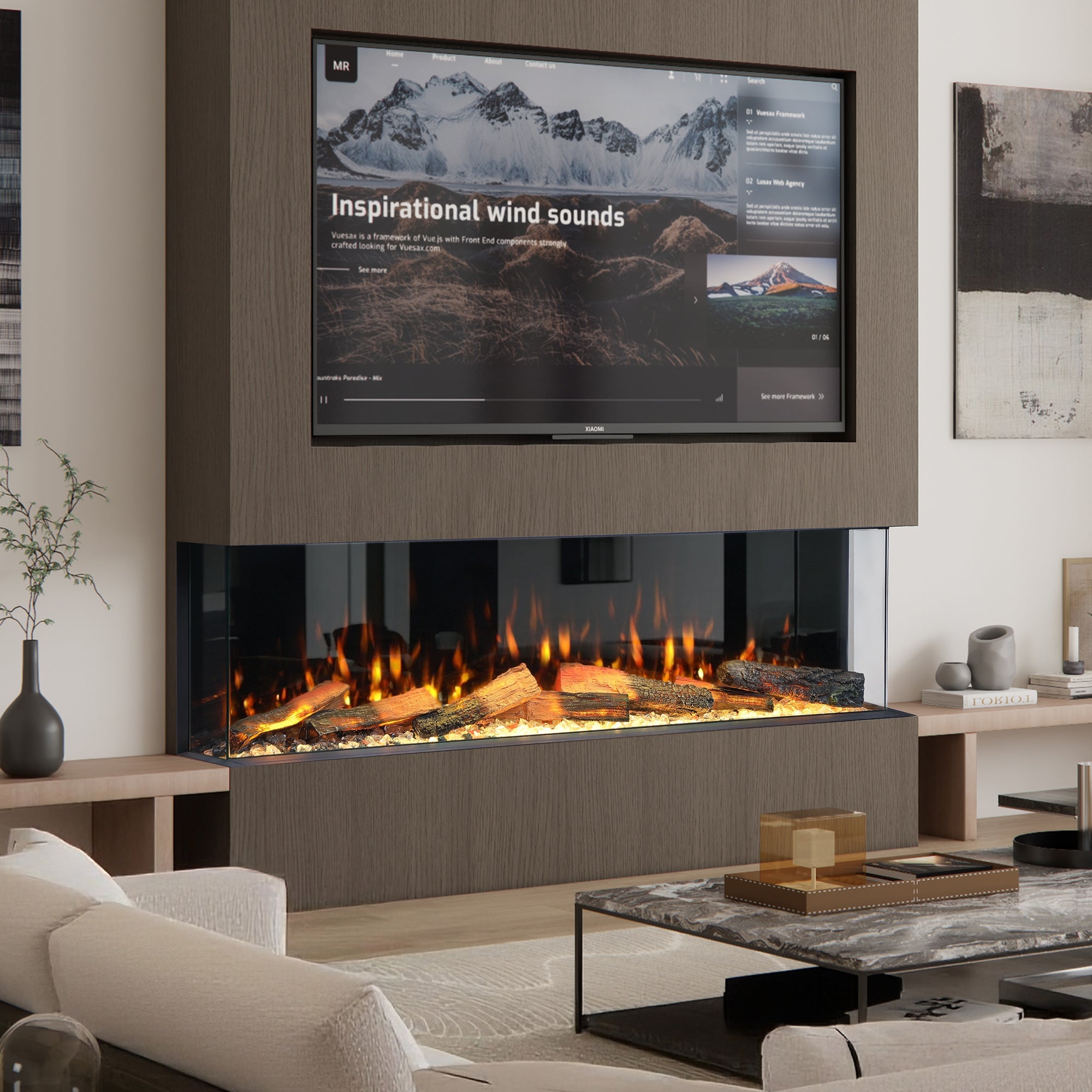
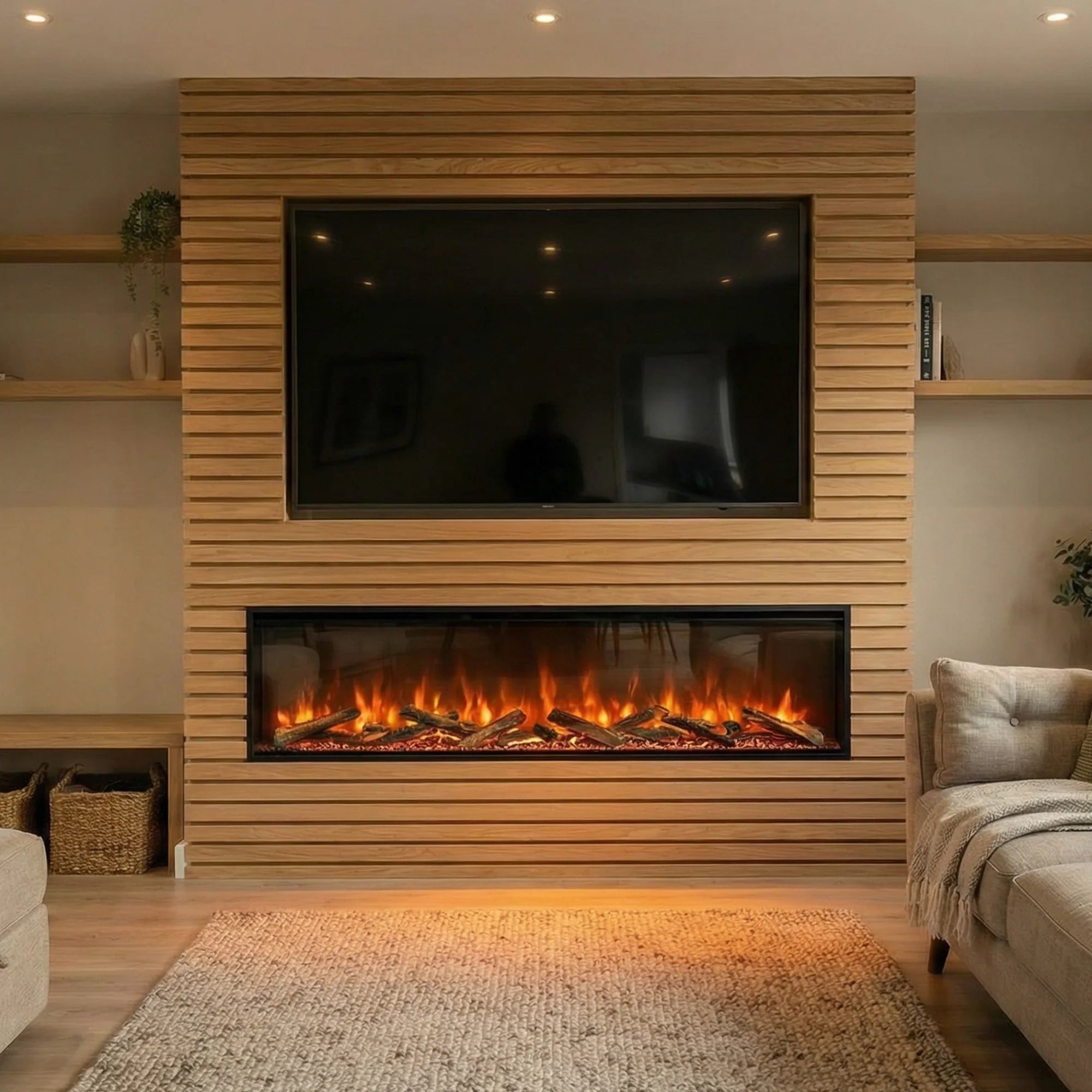
If you are building a media wall with a TV above the fire, electric is usually the practical choice.
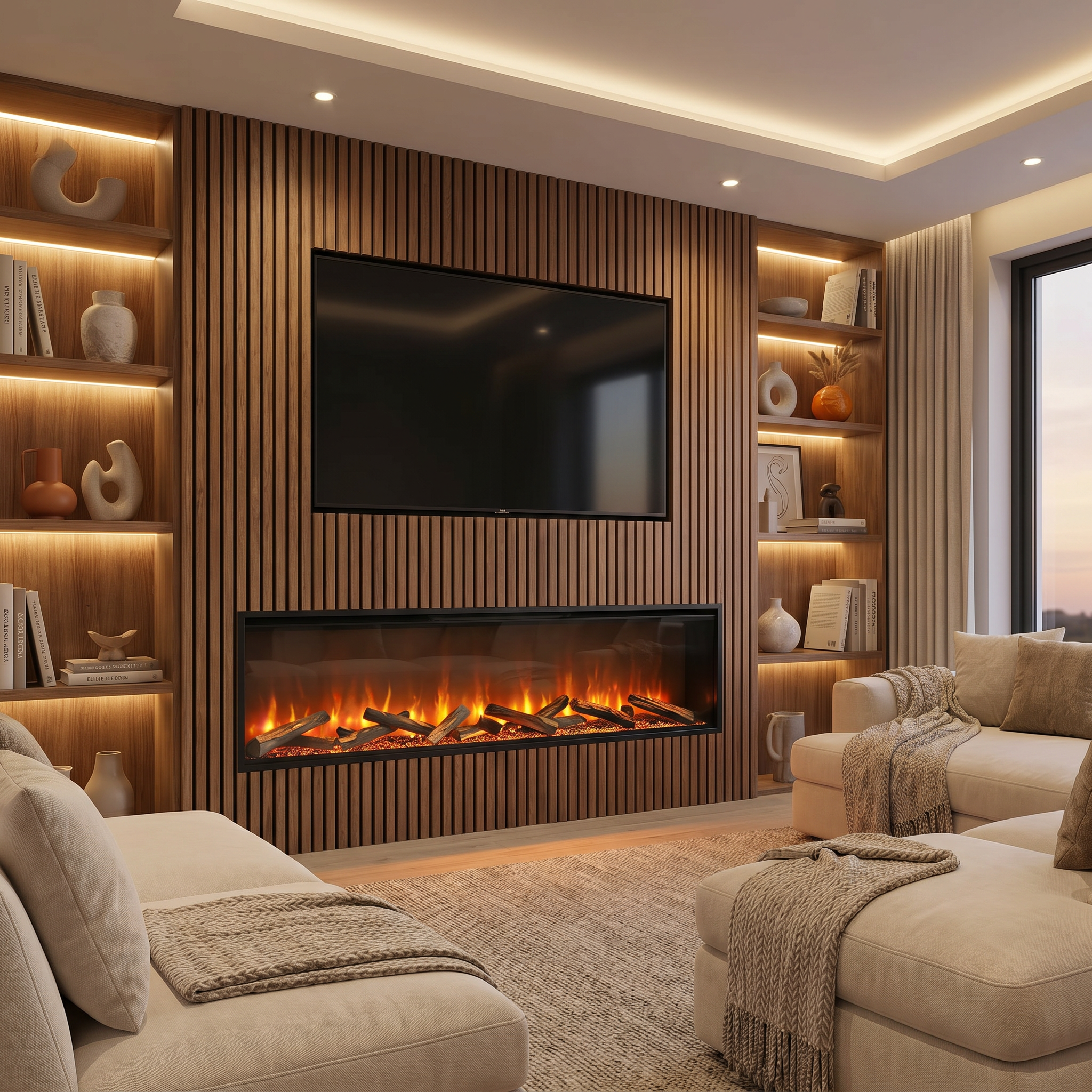
That is because electric fires are much easier to design into clean architectural spaces. You can build a feature wall, add shelving, use plaster finishes, include wood slats, and create a modern focal point without needing to route a flue or plan around a gas appliance.
A gas fire can work in some feature wall designs, but it becomes a more serious installation project. Heat management, ventilation, clearances, flue position and TV safety all need careful planning.
For most customers, if the dream is a clean TV media wall, electric is the route we would usually recommend.
Flame effect without heat
This is one of the biggest everyday advantages of an electric fire.
With many electric fires, you can use the flame effect without turning on the heater. That means you can enjoy the glow and atmosphere of the fire even when the room is already warm.
This is ideal for:
- Cosy evenings
- Spring and autumn
- Bedrooms
- Media walls
- Open-plan living spaces
- Homes where the fire is mainly for atmosphere
With a gas fire, the flame and heat are usually linked. If the flame is on, the fire is generally producing heat.
Electric gives you more control. You can have the look and mood of a fire without necessarily heating the room every time.
Running costs: it depends how you use it
Running costs depend on how often you use the fire and whether you are using heat or flame effect only.
With an electric fire, the flame-only setting usually uses much less electricity than the heater. Once the heater is turned on, it works more like a local electric room heater.
With a gas fire, running costs depend on the gas price, the fire efficiency and how long you use it.
The honest advice is this: an electric fire is often best used for atmosphere and local comfort, not as the main heating system for the whole house.
For many homes, the best setup is:
- Use the flame effect for everyday atmosphere
- Use the heater when you want a quick boost of warmth
- Use timer and thermostat settings where available
- Keep your main heating system doing the heavy lifting
That is how most people get the best out of a modern electric fire.
Maintenance: electric is easier to live with
Electric fires are very easy to live with day to day.
There is no ash, no fuel storage, no chimney sweeping and no annual gas service in the same way a gas appliance requires.
You still need to look after an electric fire properly. Keep vents clear, clean the glass carefully, follow the manual, and make sure the fire is installed correctly.
But compared with gas, there is generally much less ongoing maintenance.
Gas fires need regular servicing and safety checks. The appliance, flue and ventilation all need to remain safe and compliant.
So if you want a fireplace feature that is low-maintenance and easy to use, electric is usually the better fit.
Safety and practicality
Both electric and gas fires need to be installed correctly.
The difference is that gas fires involve combustion, gas supply and flue gases. That naturally makes installation and servicing more involved.
Electric fires do not burn fuel. They still need correct clearances, airflow, access to power and proper installation, but they are usually simpler to work into modern interiors.
For rooms without a chimney, apartments, bedrooms, renovations and media walls, electric is usually the more practical choice.
Which looks better?
This really depends on the style of home.
Gas gives you a real flame, and for a traditional fireplace setting that can be hard to beat.
But modern electric fires have come a long way. The flame picture, fuel bed, glass finish, lighting and log detail can create a very strong visual effect, especially when the fire is built into a well-designed media wall or feature wall.
If your home is more traditional, gas may still feel right.
If your home is modern, clean, interior-led and built around a TV wall or feature wall, electric usually fits the room better.
For built-in shelving, wood slats, plaster finishes, TV walls, open-plan rooms and clean architectural lines, electric gives you more design freedom.
Best Lumo options for modern homes
The best Lumo fire depends on the room, the wall depth and the type of look you want.
Here is how we would usually explain the ranges in the showroom.
Lumo Aura Series
The Lumo Aura Series is a great choice if you want a simple electric fire feature without a major building project.
It works well for customers who want a clean fireplace look, but do not necessarily want to build a full media wall.
Good for:
- Bedrooms
- Apartments
- Simple living room upgrades
- Wall-mounted layouts
- Easy fireplace features
- Homes where installation needs to stay simple
Lumo Vision Series
The Lumo Vision Series suits clean wall-mounted or recessed installations.
It is a good option if you want a modern electric fire that can work neatly into a feature wall without needing a deep build.
Good for:
- Modern rooms
- Feature walls
- Flexible installation
- Wall-mounted designs
- Recessed electric fire layouts
- Homes without a chimney
Lumo Comfort Series
The Lumo Comfort Series is a practical slimline option for media walls, chimney breast builds and wall-mounted installations.
It is a good middle-ground option when you want a stylish electric fire but need to keep wall depth sensible.
Good for:
- Slimline media walls
- TV feature walls
- Rooms where depth matters
- Everyday living spaces
- Clean built-in designs
Lumo Cozy Series
The Lumo Cozy Series is ideal for slimline built-in media wall projects.
This is one of the ranges we would point people towards when they want that clean, built-in fireplace look without going too deep into the room.
Good for:
- Media walls
- Chimney breast builds
- Shallow wall projects
- Modern living rooms
- Slimline built-in installations
Lumo Ultra Series
The Lumo Ultra Series is a full-depth option for customers who want more presence from the fire.
If the fire is going to be one of the main features in the room, Ultra gives you a deeper, stronger fireplace look.
Good for:
- Larger media walls
- Premium feature walls
- Deeper wall builds
- Living rooms where the fire is a main focal point
- Customers who want a more substantial flame picture
Lumo Odyssey Series
The Lumo Odyssey Series is designed for wider panoramic installations and more premium living spaces.
This is the kind of fire you choose when you want the fireplace to feel like a statement feature rather than just something added into the wall.
Good for:
- Wide media walls
- Large rooms
- Statement fireplace designs
- Panoramic flame effect
- Premium interiors
Lumo Loft Series
The Lumo Loft Series is a strong option if you want an inset fireplace look without using gas or solid fuel.
It suits customers who already have a fireplace opening, or who want a more classic inset style but with the simplicity of electric.
Good for:
- Fireplace openings
- Hearth upgrades
- Snugs
- Living rooms
- Replacing an old fireplace
- Homes where a media wall is not the plan
When would gas still make sense?
Gas may still be the better route if:
- You already have a suitable chimney or flue
- You mainly want the fire for strong heat
- You prefer a real gas flame
- You are happy with regular servicing
- Your room is already set up for gas
- You have a qualified gas installer involved
- You want a more traditional fireplace feel
So we would not say electric is always better. That would not be honest.
But for modern media walls, new builds, apartments, bedrooms, renovations and rooms without a chimney, electric is usually much easier to work with.
Final advice
If you are designing a modern living room, TV wall, media wall or fireplace feature, electric is usually the more flexible choice.
You get the look and atmosphere of a fire without needing a chimney, flue or gas supply. You can often use the flame effect without heat, and you have far more freedom with the design of the wall.
Gas still has its place, especially for traditional heat-led fireplace setups. But for most modern interiors, electric is usually the cleaner and simpler option.
If you are unsure which Lumo fire suits your room, send us your wall width, room photos and preferred style. We can help you narrow down the best option before you order.
FAQs
Is an electric fire better than a gas fire?
For modern media walls, apartments, bedrooms and homes without a chimney, an electric fire is usually easier and more flexible. Gas may suit customers who want traditional heat and already have the right flue and gas setup.
Do electric fires need a chimney?
No. Electric fires do not need a chimney, flue or gas supply, which makes them much easier to install in many modern homes.
Are electric fires good for media walls?
Yes. Electric fires are one of the most popular choices for media walls because they are clean, flexible and easier to design around than gas fires.
Do gas fires look more realistic?
Gas fires have a real flame, so they can feel more traditional. However, modern electric fires can create a very strong visual effect, especially in media walls and feature wall installations.
Can electric fires be used without heat?
Many electric fires allow the flame effect to run without the heater. This is ideal when you want atmosphere without warming the room.
Are electric fires easier to maintain than gas fires?
Yes. Electric fires generally require less day-to-day maintenance than gas fires and do not require gas servicing in the same way.
Which Lumo fire is best for replacing a fireplace?
The Lumo Loft Series is a strong option for fireplace openings and hearth-style upgrades. Aura and Vision can also suit simpler wall-mounted or recessed room upgrades.
Which Lumo fire is best for a media wall?
The Lumo Cozy, Comfort, Ultra and Odyssey ranges are strong options for media walls. The best choice depends on the wall depth, room size and finished look you want.
Is an electric fire good if I mainly want atmosphere?
Yes. Electric fires are excellent for atmosphere because many models allow you to use the flame effect without heat. This makes them useful throughout the year, not just in winter.
Should I choose electric or gas for a TV wall?
For most TV walls and media walls, electric is usually the simpler and more flexible option. Gas can work in some designs, but it needs more careful planning around heat, ventilation, flueing and installation requirements.

Written by My Store Admin